
Manufacturer Price 10kv 440v Three Phase Oil Immersed Transformers
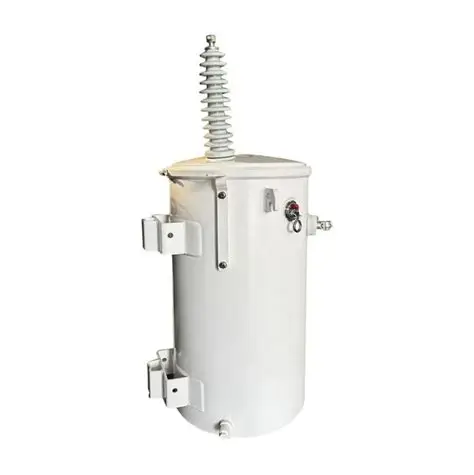
Manufacturer Price 10kv 440v Three Phase Oil Immersed Transformers
Main Parameters
Parameter | Specification |
Rated power | 1,000 kVA reference design; 100–2,500 kVA available |
Type | Three-phase, two-winding, oil-immersed distribution transformer |
Frequency | 50 Hz standard; 60 Hz as a separate design |
Primary voltage | 10,000 V nominal, Um 12 kV |
Taps | ±2 × 2.5%, off-circuit, five positions: 10,500 / 10,250 / 10,000 / 9,750 / 9,500 V |
Secondary voltage | 440 V line-to-line, 254 V line-to-neutral |
Vector group | Dyn11 standard; Dd0 or Yyn0 on request |
Rated current | ≈ 57.7 A on the HV side, ≈ 1,312 A on the LV side |
Impedance | 4.0% at 75 °C; 4.0–6.0% according to the motor starting duty and fault level |
No-load loss | ≈ 1,150 W |
Load loss | ≈ 9,000 W at 75 °C, full load |
Full-load efficiency | ≈ 98.9% |
Temperature rise | 65 K average winding, 60 K top oil; 55 K version for high ambient |
Cooling | ONAN; ONAF available on larger ratings |
Insulating fluid | Mineral oil to IEC 60296, ≈ 600 kg; ester fluid on request |
Core | Grain-oriented silicon steel, three-limb, mitred step-lap joints |
Windings | Copper HV layer winding, copper LV foil; aluminium on request |
Tank | Welded steel, corrugated wall, hermetically sealed; conservator version available |
Insulation level | 75 kV lightning impulse, 28 kV power-frequency withstand at Um 12 kV |
HV termination | Cable box or porcelain bushings, 12 kV class |
LV termination | Cable box with gland plates or busbar chamber, rated for the ≈ 1,310 A secondary current |
Tap changer | Off-circuit, five positions, lockable, external handle |
Fittings | Pressure relief device, thermometer pocket, drain and filter valves, lifting lugs, jacking pads, earthing terminals |
Sound level | ≤ 54 dB(A) at 1 m |
Mass | ≈ 2,500 kg complete; oil ≈ 600 kg |
Standards | IEC 60076-1, -2, -3, -5, -10; IEC 60137 bushings; IEC 60296 oil; IEC 60038 voltage reference |
Tests | Routine: winding resistance, ratio and vector group, no-load loss and current, load loss and impedance, applied and induced voltage, insulation resistance, oil breakdown, tap changer operation. Type: impulse, temperature rise, sound level |
Loss values are design figures. Each unit ships with a routine test report carrying the measured no-load loss, load loss, impedance and ratio for that serial number, which is what an energy calculation should be based on rather than the datasheet.
Product Description
The secondary is the reason this unit exists in the catalogue. At 440 V a 1,000 kVA transformer carries about 1,312 A against about 1,443 A at 400 V — roughly nine percent less current for the same kVA, which shows up as smaller cables, lower copper in the switchboard and slightly less heating in the joints. If the plant already runs 440 V motors, buying a 400 V transformer and living with the mismatch is the more expensive option, because every motor then runs below its rated voltage, drawing more current for the same shaft output.
Ten kilovolts on the primary gives about 57 A at this rating, so the HV side is a copper layer winding with graded insulation and a 75 kV impulse level for the Um 12 kV class. A single cable box or three porcelain bushings are both normal; the choice depends on the incoming cable route and whether the installation expects a stress cone or plain lugs.
Impedance is the number to argue about on this build. At 4.0% the prospective secondary fault current lands near 33 kA, which is more than a light industrial board can break, and at 4.5% it drops to about 29 kA. The lower impedance helps start large motors across the line; the higher one is easier on the switchgear. Most plant retrofits settle at 4.5%, with motor starting handled by a soft starter or a star-delta rather than by buying a transformer that makes the fault level worse.
The tank is corrugated and sealed under vacuum, with expansion taken by the wall. On a coastal or chemical site, the paint system is the part that fails first if it was specified as an afterthought, so the coating class belongs in the enquiry rather than in the fine print.
On price: at this rating a manufacturer price is mostly copper, core steel, oil and tank weight. What moves it up or down between suppliers is the loss level, the winding material, whether the tap range is three positions or five, whether the protection is a plain cable box or a full package, whether the paint is a standard coat or a heavy-duty system, and whether the test report is per unit or per batch. None of those items are visible in a total price, and all of them are visible in the documents.
Core Uses
The unit takes 10 kV down to a 440 V three-phase supply. Five uses account for most orders on this ratio.
• Plants running 440 V motor stock. Existing 440 V motors, starters and panels kept as they are, with the supply brought to match.
• Retrofit and replacement projects. An old 440 V transformer replaced on the same foundation, cable entries and switchboard.
• Mining, marine and heavy-duty sites. 440 V equipment common in these fleets, often with a ruggedised paint system.
• Process lines with mixed duty. Motors, drives, heaters and controls on one 440 V board.
• Export projects to 440 V markets. Plants built to a 440 V standard where the local supply is 10 kV.
Application Scenarios
This unit belongs where the supply is 10 kV and the load is 440 V three-phase. The table sets out the situations that generate most enquiries.
Scenario | Typical load | Why this unit fits |
Existing 440 V plant | Motor control centres, pumps, compressors, fans | Secondary matches the installed equipment instead of forcing a voltage change across the whole plant |
Transformer replacement | Ageing unit with rising loss and oil leaks | Same ratio and footprint, modern loss level, no downstream rework |
Mining and heavy industry | Conveyors, crushers, heavy motors | Low impedance supports motor starting; rugged paint and sealed tank suit dusty sites |
Marine and port facilities | Shore supply, cranes, pumps | 440 V is a common marine service voltage; heavy-duty coating for salt air |
Export plant projects | Full plant distribution on 440 V | Per-unit test reports, witnessed FAT and export packing |
Mixed commercial and industrial sites | Workshop, process area, lighting via 254 V single-phase | Dyn11 gives 254 V for single-phase circuits from the same unit |
One caution belongs here. 440 V is about ten percent above 400 V, which most industrial motors tolerate, but electronic drives, lighting and control equipment rated strictly at 400 V may not, and a 440 V supply on a 400 V-rated board is a warranty argument waiting to happen. Check what the load actually expects before ordering, and if the plant is mixed, say so at the enquiry stage.
Product Features
At this rating, the features that matter are the ones that affect starting duty, service life and the price you can defend.
• 440 V secondary, fixed at winding. About 1,312 A at 1,000 kVA, with the LV termination sized for that current rather than a nominal figure.
• Impedance chosen for the duty. 4.0% for hard motor starting, 4.5% where the switchboard's breaking capacity sets the limit.
• Copper windings as standard. Better hot-spot margin and short-circuit withstand than an aluminium build at the same rating.
• Measured losses per unit. Around 1,150 W no-load and 9,000 W load loss, with numbers on a serial-numbered test report.
• Sealed corrugated tank. Vacuum filled, no conservator or breather to service; conservator version available.
• Coating specified for the site. Standard coat for indoor plant, heavy-duty system for coastal, chemical or dusty service.
• Five tap positions. 9,500–10,500 V covers a feeder that sags under summer load.
• Options priced separately. Cable box versus bushings, ONAN versus ONAF, standard versus heavy-duty paint, all quoted as line items so the price can be compared.
Questions Buyers Ask
Question | Answer |
Can I use this on a 400 V plant? | Not without checking the load. Motors usually tolerate 440 V; drives, lighting and control equipment rated strictly at 400 V may not. The secondary voltage is fixed at winding, so this has to be decided before the order. |
Why 440 V and not 415 V? | Because the installed motor and panel stock is 440 V. 415 V is the IEC preferred value, but a retrofit does not get to choose its own voltage. |
What impedance should I specify? | 4.5% is the safe default where the switchboard's breaking capacity is around 30 kA. Go to 4.0% only if motor starting is the binding constraint and the switchgear can handle the higher fault current. |
Is the price per kVA lower at larger ratings? | Generally yes, up to a point, because core and tank cost grows slower than rating. Below 400 kVA the per kVA price rises again, and the crossover is where a single unit stops making sense. |
Can it run at 55 °C ambient? | With a derating or a 55 K rise design. Site ambient and altitude both have to be stated, because they change the cooling margin long before they change the price. |
What is needed for the offer? | Rating, primary and secondary voltage, vector group, impedance or starting duty, termination and cooling, paint system, ambient and altitude, quantity, destination port. |
Send the motor list along with the single-line diagram. On a 440 V retrofit, the largest motor and its starting method decide the impedance, and the impedance decides whether the price you were quoted buys a transformer that actually runs the plant.