
Outdoor Fabulous Price 10kv 400v Three Phase Oil Immersed Transformers
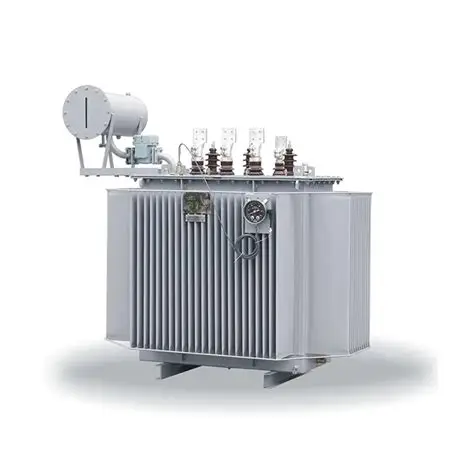
Outdoor Fabulous Price 10kv 400v Three Phase Oil Immersed Transformers
Main Parameters
Parameter | Specification |
Rated power | 630 kVA reference design; 100–2,500 kVA available |
Type | Three-phase, two-winding, oil-immersed distribution transformer, outdoor installation |
Frequency | 50 Hz standard; 60 Hz as a separate design |
Primary voltage | 10,000 V nominal, Um 12 kV |
Taps | ±2 × 2.5%, off-circuit, five positions: 10,500 / 10,250 / 10,000 / 9,750 / 9,500 V |
Secondary voltage | 400 V line-to-line, 230 V line-to-neutral |
Vector group | Dyn11 standard; Yyn0 or Dd0 on request |
Rated current | ≈ 36.4 A on the HV side, ≈ 909 A on the LV side |
Impedance | 4.5% at 75 °C; 4.0–6.0% according to the project's fault level |
No-load loss | ≈ 780 W |
Load loss | ≈ 6,200 W at 75 °C, full load |
Full-load efficiency | ≈ 98.9% |
Temperature rise | 65 K average winding at 40 °C ambient; 55 K rise design for 50 °C sites or high solar gain |
Cooling | ONAN; ONAF available on larger ratings |
Insulating fluid | Mineral oil to IEC 60296, ≈ 460 kg; ester fluid on request |
Core | Grain-oriented silicon steel, three-limb, mitred step-lap joints |
Windings | Copper HV layer winding, copper LV foil; aluminium on request |
Tank | Welded steel, corrugated wall, hermetically sealed, with a sloped top and no water traps; conservator version available |
Paint system | ISO 12944 C4 standard (two-coat, ≥ 120 µm); C5-M for coastal and chemical sites |
Insulation level | 75 kV lightning impulse, 28 kV power-frequency withstand at Um 12 kV |
HV termination | Outdoor porcelain bushings, 12 kV class, creepage ≥ 20 mm/kV; cable box IP54 alternative |
LV termination | Cable box, IP54, with gland plates and drainable entry, rated for the ≈ 909 A secondary current |
Tap changer | Off-circuit, five positions, lockable, external handle |
Fittings | Pressure relief device, thermometer pocket, drain and filter valves, lifting lugs, jacking pads, earthing terminals, wildlife guards on bushings |
Sound level | ≤ 50 dB(A) at 1 m |
Mass | ≈ 1,900 kg complete; oil ≈ 460 kg |
Standards | IEC 60076-1, -2, -3, -5, -10; IEC 60137 bushings; IEC 60296 oil; ISO 12944 corrosion protection; IEC 60529 IP ratings for cable boxes |
Tests | Routine: winding resistance, ratio and vector group, no-load loss and current, load loss and impedance, applied and induced voltage, insulation resistance, oil breakdown, tap changer operation. Type: impulse, temperature rise, sound level |
Loss values are design figures. The routine test report that ships with each unit carries the measured no-load loss, load loss, impedance and ratio for that serial number, and the ambient and solar conditions assumed in the temperature-rise test should be stated on it.
Product Description
Outdoors, the electrical design does not change much: a three-limb grain-oriented core, a copper layer HV winding with graded insulation at a 75 kV impulse level, a copper foil LV winding carrying about 909 A, and a 4.5% impedance that puts secondary fault current near 20 kA. What changes is everything around the active part.
The tank is sealed under vacuum with a sloped top so water does not stand on it, and expansion is taken by the corrugated wall. A sealed tank is the right choice outdoors precisely because the alternative — a conservator with a breather — breathes humid air in and out every day, and in a wet climate that means moisture in the oil and a silica gel canister that nobody changes.
Paint is the first thing that fails in service. A standard two-coat system to ISO 12944 C4 gives around 120 µm and holds up in inland industrial air. Within a few kilometres of the coast, C5-M with a zinc-rich primer and a thicker total film is the only realistic specification; a C4 unit on a coastal site will show rust at the welds by year four, and repainting a transformer in place costs more than the paint upgrade ever did.
Sun and ambient set the thermal margin. A dark tank in full sun runs its top oil hotter than the air temperature, and a 65 K rise design at a nominal 40 °C ambient has no headroom left at 50 °C. On sites where the afternoon air is 45 °C or more, the practical options are a 55 K rise design, a derating to about 90% of rating, or an ONAF cooling upgrade — and the first is usually the cheapest of the three.
Terminations and small parts finish the job. Outdoor bushings need real creepage, and in regions with birds and rodents, phase-to-phase wildlife guards cost very little at the factory and prevent a nuisance trip that takes a crew out at night. Cable boxes should be IP54 with gland plates and a drainable entry, because a cable box that fills with water in a storm is how a good transformer acquires a bad reputation.
On price, "fabulous" is not a spec. What actually moves an outdoor build above an indoor one is the paint class, the bushing creepage class, the IP-rated cable box, the wildlife guards, the sloped tank top and the foundation drawings. Those items are a modest share of the total, and they are the ones that decide whether the unit is still in service in year fifteen.
Core Uses
The unit steps 10 kV down to a 400 V three-phase supply and sits outdoors. Five uses account for most orders on this configuration.
• Plant and yard distribution. A transformer on a concrete plinth feeding a workshop, warehouse or process area.
• Pumping stations and wells. Outdoor installation next to the pump house, with cable entries that survive weather.
• Construction and temporary supply. Site power that gets relocated as the project moves.
• Utility and mini-substation LV points. A pole or plinth-mounted unit at the end of a 10 kV feeder.
• Remote and off-grid facilities. Telecom sites, farms, small plants where an indoor room is not justified.
Application Scenarios
This unit belongs outdoors wherever the supply is 10 kV, the load is 400 V three-phase, and there is no ventilated transformer room. The table maps the situations that generate most enquiries.
Scenario | Typical load | Why this unit fits |
Industrial yards and workshops | Motors, welding, lighting, compressed air | Outdoor plinth avoids a transformer room; C4 paint and sealed tank suit inland air |
Coastal and port sites | Pumps, cranes, conveyors, lighting | C5-M paint system and higher bushing creepage are the difference between five years and fifteen |
Pumping and water treatment | Pump motors, blowers, controls | Sealed tank and 55 K option handle sun-exposed stations in hot climates |
Construction sites | Site office, tools, hoists | Relocatable, 1.9 t, with jacking pads and lifting lugs for a line truck |
Utility LV distribution points | Residential cluster, shops, street lighting | Standard rating held as spares, with outdoor bushings and wildlife guards |
Remote facilities | Telecom, farm, small plant | No room to build; the unit runs unattended with nothing to top up |
Two limits are worth stating. An outdoor oil transformer is not a kiosk: if local rules require the unit to be inside a locked enclosure with restricted access, that is a different product and the price reflects it. And where the site floods, the plinth height is the specification that matters most — a sealed tank is watertight, but a submerged cable box is not.
Product Features
These are the points that make an outdoor build hold up, and that a buyer can check in the offer rather than after the first rainy season.
• Sealed tank with a sloped top. No conservator or breather to draw in humid air, and no standing water on the lid.
• Paint class stated in writing. ISO 12944 C4 as standard, C5-M for coastal and chemical sites, with the total film thickness given.
• Outdoor bushings with real creepage. 12 kV class porcelain at 20 mm/kV or better, with wildlife guards as a line item.
• IP54 cable boxes. Gland plates and drainable entries, sized for the ≈ 909 A secondary current rather than a nominal figure.
• Ambient and solar handled explicitly. 65 K rise at 40 °C, 55 K rise design or a stated derating above that, with the assumption on the test report.
• Measured losses per unit. Around 780 W no-load and 6,200 W load loss, on a serial-numbered report.
• Foundation and earthing drawings included. Plinth dimensions, anchor points, cable entry positions and earthing terminals issued before production.
• Nothing to service between inspections. Sealed unit, external tap handle, drain and filter valves, thermometer pocket — the maintenance list is short by design.
Questions Buyers Ask
Question | Answer |
Does an oil transformer need an enclosure outdoors? | Not for the weather: the tank, bushings and cable boxes are built for outdoor service. An enclosure is about access control and local rules, and it is a separate product if the site requires one. |
How much does the ambient temperature reduce capacity? | Roughly 1% per degree above the design ambient once the rise margin is used up. A 55 K rise design is usually cheaper than buying the next rating up. |
Is C5-M paint worth the extra? | Within a few kilometres of salt water, yes. Repainting a transformer in place costs more than the upgrade, and rust at the welds is where it always starts. |
What about rain entering the cable box? | IP54 with gland plates and a drainable entry. Water standing in a cable box is the most common avoidable failure on an outdoor installation. |
Can it be installed on a pole instead of a plinth? | At this rating, a plinth. Pole mounting suits single-phase units in the 25–167 kVA range; 1,900 kg belongs on concrete. |
What is needed for the offer? | Rating, voltages, vector group, impedance, ambient and altitude, coastal or inland, paint class, cable box or bushings, plinth or pole, quantity and destination port. |
Send the site conditions with the enquiry — maximum shade air temperature, distance to the coast, whether the plinth will be in a flood path. On an outdoor unit those three facts decide the paint, the temperature-rise class and the plinth height, and they cost nothing to state at the quotation stage.